

Energy costs remain one of the most significant operational pressures for UK businesses.
From April 2026, several regulated non‑commodity charges will change, and these updates may impact sites differently depending on their consumption patterns and operational setup.
To help you stay ahead, here’s a simple overview of what’s changing and why it matters.
What are non‑commodity charges?
Non‑commodity charges are regulated costs included in your electricity bill but separate from the unit price you pay for energy. They cover essential elements of the system such as:
- Use of the electricity networks
- Balancing the national grid
- Government environmental schemes
These charges make up a substantial portion of your total electricity costs, so changes can meaningfully affect budgets; particularly for energy‑intensive manufacturing environments.
What’s changing from April 2026?
A number of adjustments will take effect, including:
- Distribution charges: Moving away from fixed daily rates towards costs that depend more on your site’s capacity and peak‑time usage.
- Transmission charges: Increasing to support long‑term investment in the UK electricity grid.
- Balancing charges: Now set in advance for six‑month periods but still showing volatility.
- Environmental levies: Largely stable, with modest rises linked to policy schemes and inflation.
What does this mean for UK Businesses?
The cost impact varies significantly and is influenced by:
- Your site location
- Voltage level
- Agreed capacity
- Operating hours and load patterns
- Process‑driven peaks unique to your business
Because of this variability, non‑commodity costs don’t appear as a single line item on the bill, and the changes won’t affect every site in the same way. Our optimisation team is monitoring these shifts closely and will continue to ensure they are accurately reflected in pricing and billing.
Want to understand your site’s exposure?
We’re offering no‑obligation reviews to help you:
- Determine whether April’s changes could materially affect your site
- Understand how your capacity and peak‑time usage influence costs
- Explore steps to manage or mitigate any increases
- Identify opportunities for optimisation or bill validation
For businesses, non-commodity charges can be one of the least visible but most impactful parts of an electricity bill. The changes coming in April place more emphasis on how and when sites use electricity, which means two similar facilities could see very different outcomes. Understanding those drivers early gives businesses more control over their costs.
If you’d like to explore this in more detail, we’re happy to walk you through what we’re seeing in the market and what it could mean for your operations.
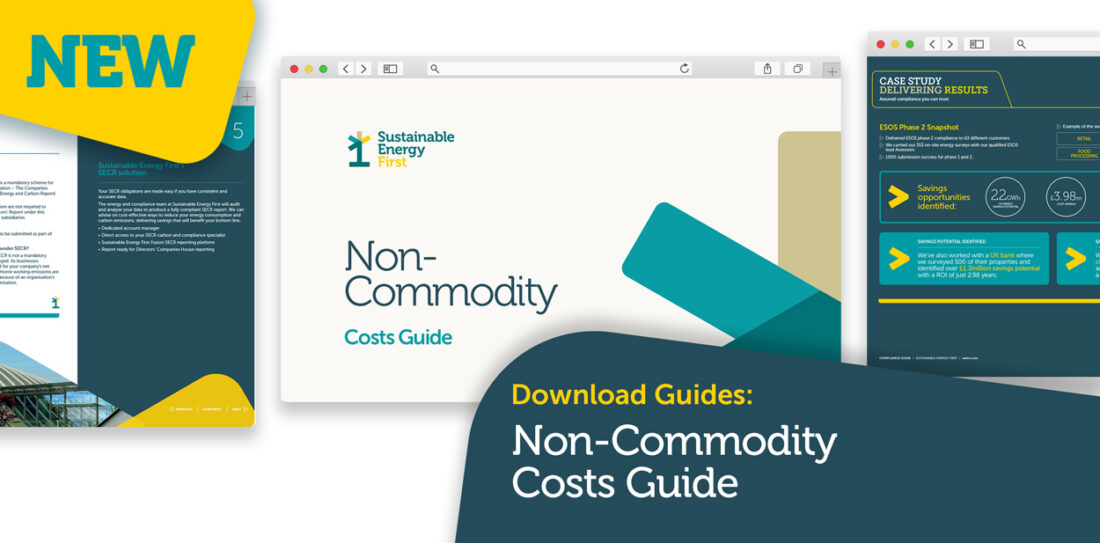
And if you would like to know more about non-commodity costs you can download our newest FREE downloadable guide that has been created by our experts and the Energy Advice Hub here:
For more detailed information on the changes to non-commodities you can check out our article here on the Energy Advice Hub ⬇️
If you’re responsible for energy budgets, you’ll know that the wholesale price of electricity is only part of the story. Typically, 60 – 65% of your electricity bill is made up of non-commodity costs – network charges and green levies that sit outside your contracted unit rate.
2026 and 2027 will see an overall rise in non-commodity charges, largely to modernise grid infrastructure and support the clean energy transition. To help you plan your energy budget, we’ve put together a breakdown of non-commodity cost changes for electricity in 2026 and 2027.