Extreme weather, volatile energy markets and pressure to decarbonise are increasingly converging into the same business challenge. For high-energy users, reducing carbon and securing a competitive energy price are increasingly connected challenges. Businesses need to manage both while maintaining operational resilience and making sure investments deliver a financial return.
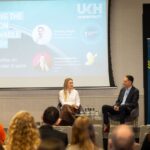
Tim Doubleday, CFO of Burger King – a Sustainable Energy First client and Chair of Hospitality Sector Council’s Sustainability Committee – gave a stark example in his opening speech at the 2026 UKHospitality* Sustainability Seminar on 14 October.
“The summer heatwave meant that we had something like 260 additional callouts for freezer failures, air-conditioning failures and so on. We can put a cost on that in terms of lost sales. It has brought a real, visceral understanding of what climate change means for our sector.”

For businesses operating energy-intensive sites, this experience will sound familiar. Higher temperatures can place additional strain on cooling, refrigeration and HVAC systems, while energy-market volatility adds another layer of financial uncertainty. At the same time, businesses are being asked to invest in decarbonisation.
But recognising the risk does not automatically make the investment case.
Tim argued that the wake-up call created by extreme weather won’t translate into capital spending on decarbonisation unless the numbers work. He is therefore calling for hospitality to receive a share of government support for energy-intensive industries. “It makes the case for electrification of kitchens much more persuasive from a return-on-investment perspective.”
In the absence of that help, businesses need to find their own solutions.
As Anthony Mayall, managing director of Sustainable Energy First, told the UK Hospitality’s delegates: “We need to address cost and carbon simultaneously.”
From energy procurement to energy strategy
“We thrive where energy suppliers don’t want to innovate.”
Anthony was reflecting on the role that Sustainable Energy First has carved out in recent years. “We started life as a traditional utility procurement and revenue recovery business. But, 10 or 15 years ago, the conversation was about cost alone.”
SE First’s 2022 rebrand (a move away from our origins as BIU) reflected a shift in mindset: the realisation that carbon reduction and energy costs are closely related problems with shared solutions.
For large energy users, securing a competitive tariff is only one part of the picture. Procurement, efficiency, renewable generation, risk management and carbon reduction all have a role to play in a wider energy strategy.
‘Deep green energy’
In recent years, Sustainable Energy First has pioneered what Anthony calls ‘deep green energy’: alternatives to the classic ‘renewable’ supplier tariff that offer greater sourcing transparency as well as cost savings. But this doesn’t necessarily mean on-site generation.
A quick show of hands at the conference revealed that most of the hospitality businesses represented (many of whom are multi-sites) don’t own the buildings they operate from. Of those who do, many don’t have the right set-up for rooftop solar.
The same practical constraints exist across many commercial property portfolios. Ownership structures, available roof space, site configuration and investment criteria can all limit what can realistically be achieved through on-site generation.
So, while many businesses can benefit from generating their own power, it is only part of the picture.
“We’re all going to have to do a little bit of everything,” said Anthony. “Even if a generation asset works great for one part of your site, it’s not necessarily going to translate across the rest. So you also need energy efficiency and off-site renewables.”
(Anthony has previously written about the questions to ask if your business is considering on-site generation.)
Test, measure, learn
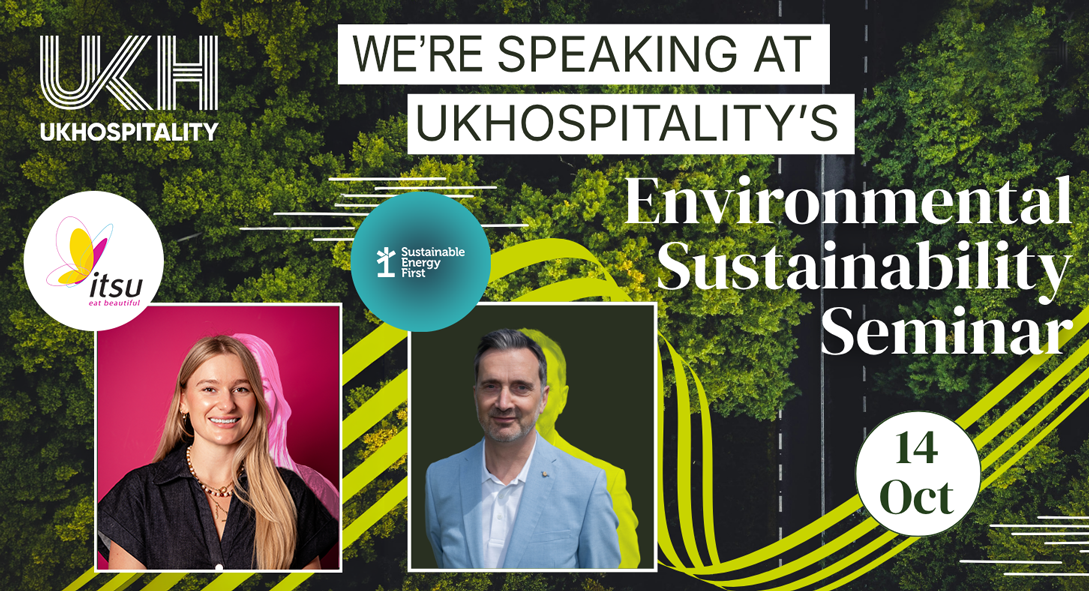
The operational dimension of energy management was reinforced by Maddy Reynolds, finance analyst at fast-food chain itsu and a Sustainable Energy First client.
She echoed Tim Doubleday’s comments on the impact of extreme temperatures. “The summer was brutal for us. Our fridges and air conditioning couldn’t quite handle any sustained heat.”
The food chain had previously run an experiment in which half its shops turned off fridges overnight, while the other half left them running. Counter-intuitively, the shops that switched refrigeration off measured higher electricity consumption overall because the equipment had to work harder to reach food-safe temperatures again every morning.
“That was a huge insight for us,” said Maddy. “We were grateful that we knew this before the brutal temperatures came through.”
It is a useful illustration of a wider point for high-energy users: assumptions about energy efficiency need to be tested against operational data. What appears to be an obvious saving may not deliver the expected result once real operating conditions are taken into account.
Managing price volatility
For finance teams, predictability can be almost as important as headline price.
Maddy highlighted the value of itsu’s five-year energy deal, brokered through Sustainable Energy First. “Greg, our group CFO, has a huge smile on his face. Having the confidence in the prices is huge for us.”
Anthony Mayall picked up the conversation, and explained why Sustainable Energy First is increasingly looking beyond conventional contract lengths.
“The energy market is wired around three-year contracts, principally because liquidity in the wholesale market is typically three years. We wanted to push that envelope out to five years because it’s so useful from a budgeting point of view – renewable prices aren’t as volatile.”
Larger businesses have another option: a corporate power purchase agreement (CPPA). These agreements can provide access to competitively priced renewable electricity over the long term, but the barriers can be significant.
“It’s a 15-year commitment,” said Anthony. “You need a double-A-rated, gold-plated credit rating. And it can take up to two years to negotiate a deal – with very expensive, annoying lawyers.”
Using collective buying power
Sustainable Energy First has developed another model: the Sustainable Energy Consortium (SEC).
While a CPPA typically matches one generator with one business, SEC matches a cohort of businesses with a group of generators. Being part of a consortium means individual businesses do not need the same negotiating power or credit strength required for a conventional CPPA.
“Our team is out there brokering deals with generators, small and large,” commented Anthony.
Setting up deals with generators years in advance provides “something of a shield from market volatility. For example, the current offtake market is bouncing around 15p per kWh. But a whole bunch of our customers are looking at commodity prices of around 8p.”
Some SEC members have also reduced their non-commodity costs, which can represent a significant proportion of overall energy spend. Some generators are small enough to be classed as licence-exempt, which means they don’t pay the usual levies.
Making renewable sourcing transparent
The ‘deep green’ element of SEC comes through greater transparency over where electricity comes from.
One limitation of REGO-backed ‘green’ supplier tariffs is the lack of a clear link between renewable electricity generation and the consumption of the business buying the tariff.
Anthony explained that SEC addresses this by matching generation to usage on a half-hourly basis. Businesses receive data showing how closely their consumption aligns with renewable generation, providing evidence that can support climate reporting as well as their own carbon reduction plans.
For businesses under increasing pressure to substantiate environmental claims, that visibility is becoming increasingly important.
Preparing for the next ‘bumps in the road’
Energy risk does not stop at the meter! Tim Doubleday warned that geopolitical instability and pressure on global energy supplies can feed through into supply chains, commodity prices and inflation.
“We haven’t yet seen the secondary impacts of [the situation in the Middle East].”
Around a third of globally traded fertilizer normally travels through the Strait of Hormuz, creating another potential cost pressure for food businesses. “Plants were in the ground in February. Fertiliser had been bought. But for next year, fertiliser issues will lead to a higher cost of goods.”
For hospitality, manufacturing and other energy-intensive sectors, this is the wider landscape in which energy decisions are now being made: volatile markets, climate-related operational disruption, pressure on margins and growing expectations around decarbonisation.
There is unlikely to be one intervention that resolves all of these pressures. Energy efficiency, smarter procurement, renewable sourcing, operational data and investment in appropriate generation assets all have a role to play.
This brings the argument back to Anthony’s central point: “We need to address cost and carbon simultaneously.” Collaboration will also matter. The event was the fifth UKHospitality Sustainability Seminar, bringing businesses together to share their experiences and potential solutions.
The final word lies with Burger King’s Tim Doubleday: “UKHospitality has always provided the space for our sector to work together and drive change.”
*Sustainable Energy First is a Supplier Member and regular content partner of UK Hospitality.